Hydrogen Inhalation Generator Guide | Revive Hydrogen
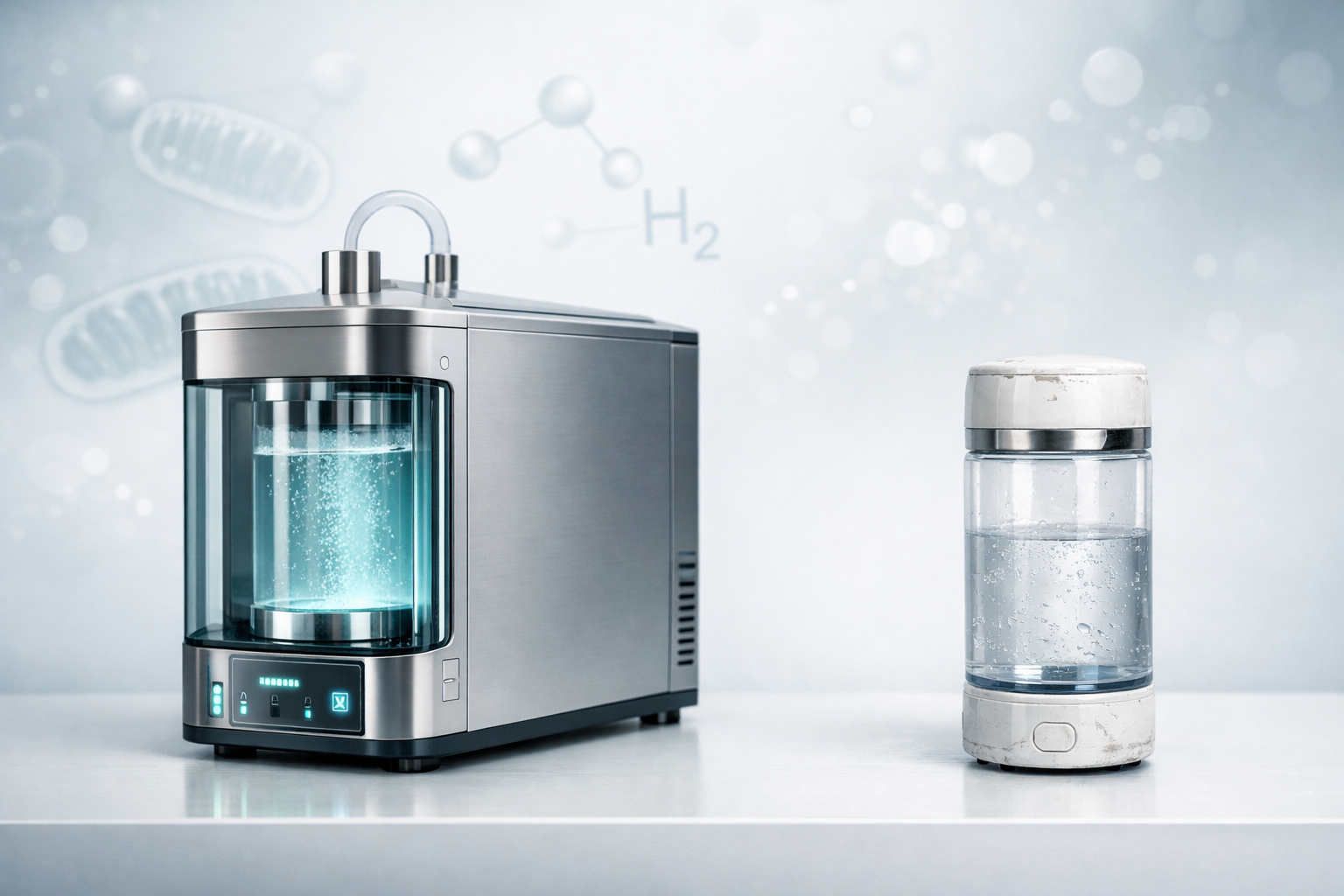
The Science of Molecular Hydrogen: Why Output and Delivery Method Define Therapeutic Efficacy
Molecular hydrogen (H₂) therapy is rapidly emerging as one of the most promising tools in modern wellness and longevity science. But not all hydrogen delivery systems are created equal. The difference between a professional-grade hydrogen inhalation generator and a low-output consumer device isn't just a matter of convenience or price — it's a question of biochemical efficacy, tissue saturation, and the fundamental ability to achieve meaningful oxidative stress mitigation at the cellular level. Understanding these distinctions requires a closer look at how H₂ functions in the body, what levels are required to trigger beneficial effects, and why inhalation remains the gold standard for systemic delivery.
How Molecular Hydrogen Works: Selective Antioxidant Action and Mitochondrial Optimization
Molecular hydrogen is not a magic bullet, but its mechanism of action is remarkably elegant. Unlike broad-spectrum antioxidants that indiscriminately scavenge all reactive oxygen species (ROS), H₂ acts as a selective antioxidant. It specifically targets the most cytotoxic free radicals — hydroxyl radicals (•OH) and peroxynitrite (ONOO⁻) — while leaving beneficial signaling molecules like hydrogen peroxide (H₂O₂) intact.
This selectivity is critical. Hydrogen peroxide and superoxide anion, for example, play essential roles in immune signaling, cellular differentiation, and adaptive stress responses. Neutralizing them completely would disrupt homeostatic balance. Hydroxyl radicals and peroxynitrite, by contrast, are highly reactive and damaging. They attack lipids, proteins, and DNA indiscriminately, driving inflammation, mitochondrial dysfunction, and accelerated aging. By neutralizing these specific radicals, H₂ supports mitochondrial efficiency, reduces oxidative burden, and creates conditions for optimal cellular recovery — without disrupting beneficial redox signaling pathways.
Additionally, molecular hydrogen modulates gene expression related to antioxidant enzyme production (such as superoxide dismutase and catalase), supports mitochondrial membrane potential, and has been shown in preclinical models to reduce inflammatory cytokines and promote metabolic homeostasis. These effects, however, are concentration-dependent and require sufficient tissue saturation to manifest.
Why Inhalation Outperforms Ingestion: The Bioavailability and Saturation Imperative
Hydrogen-enriched water has popularized H₂ therapy, but it is inherently limited by solubility and gastric absorption dynamics. Water can only dissolve a finite amount of hydrogen — typically 1.6 parts per million (ppm) under ideal conditions. Even with frequent consumption, achieving sustained systemic concentrations sufficient to saturate tissues, cross the blood-brain barrier, and reach mitochondrial compartments is challenging.
Inhalation, by contrast, delivers molecular hydrogen directly into the bloodstream via the lungs. This method bypasses digestive limitations, allows for precise dosing, and enables sustained therapeutic levels throughout the body. Professional-grade hydrogen inhalation generators produce high-purity H₂ at flow rates of 200–600 milliliters per minute or more, allowing users to inhale hydrogen passively for 30 to 90 minutes per session. This ensures deep tissue penetration, crossing cellular and subcellular membranes with ease due to hydrogen's small molecular size and lipophilic properties.
Research indicates that inhalation can achieve blood concentrations of H₂ far exceeding those from drinking water, with rapid distribution to organs including the brain, liver, heart, and skeletal muscle. For individuals seeking neurological support, recovery from physical exertion, or metabolic optimization, inhalation offers a level of bioavailability that water consumption simply cannot match.
Professional-Grade vs. Consumer Devices: What Separates Efficacy from Marketing
The proliferation of budget hydrogen devices has created confusion in the marketplace. Many low-cost units — often marketed as portable or "wellness-grade" — produce hydrogen at minimal flow rates (under 100 mL/min), inconsistent purity, or rely on electrolysis methods that introduce unwanted byproducts such as ozone or chlorine gas. These limitations compromise both safety and efficacy.
Key Differentiators of Professional Systems
- High-purity output: Medical and research-grade generators use advanced PEM (proton exchange membrane) or SPE (solid polymer electrolyte) technology to produce hydrogen at 99.9% purity or greater, free from contaminants.
- Therapeutic flow rates: Units designed for clinical and serious wellness use deliver 300–600 mL/min, ensuring adequate dosing for systemic saturation within practical session durations.
- Consistency and durability: Professional devices are engineered for thousands of hours of use with minimal degradation, stable output, and calibrated performance across sessions.
- Safety certifications: Reputable systems meet or exceed regulatory standards for electrical safety, gas purity, and materials used in contact with hydrogen.
- User control and monitoring: Advanced models include flow rate adjustments, purity indicators, and session timers to optimize individual protocols.
Cheap home devices, by contrast, often sacrifice these features in favor of portability or price. While they may produce some hydrogen, the concentrations and purity levels are frequently insufficient to achieve the tissue saturation necessary for meaningful biological effects. In wellness and longevity contexts, where consistency and cumulative exposure matter, investing in a professional-grade system is not a luxury — it's a foundational requirement.
Who Benefits Most from High-Output Hydrogen Inhalation?
While molecular hydrogen holds promise across a wide range of wellness applications, certain populations stand to benefit most from high-output inhalation protocols:
Athletes and active individuals seeking faster recovery, reduced exercise-induced oxidative stress, and enhanced mitochondrial efficiency during training cycles. Biohackers and longevity enthusiasts integrating H₂ into comprehensive anti-aging and metabolic optimization strategies. Individuals managing chronic oxidative stress associated with metabolic imbalances, environmental exposures, or high-demand lifestyles. Professionals in high-stress environments aiming to support cognitive function, mental clarity, and resilience under pressure.
For these users, sporadic or low-dose hydrogen exposure is unlikely to produce perceptible results. Consistent, high-saturation sessions using a professional hydrogen inhalation generator create the conditions for observable improvements in energy, recovery, and overall vitality.
Bring This Technology Home
The scientific case for molecular hydrogen is robust and growing. But realizing its potential requires more than understanding the biochemistry — it demands access to technology that delivers therapeutic concentrations reliably, safely, and conveniently.
Revive Hydrogen has engineered a solution that bridges the gap between clinical-grade performance and accessible home use. Designed for discerning wellness professionals, athletes, and longevity-focused individuals, the Revive Hydrogen Generator delivers high-purity molecular hydrogen at flow rates optimized for systemic tissue saturation. Every unit is built with advanced PEM technology, rigorously tested for safety and consistency, and supported by a team committed to elevating the standard of at-home hydrogen therapy.
Whether you're integrating H₂ into a recovery protocol, a longevity regimen, or a clinical practice, the Revive system provides the output, purity, and reliability that distinguish genuine therapeutic tools from consumer novelties. Explore the Revive Hydrogen lineup and experience what professional-grade inhalation can do for your health, performance, and cellular vitality.


Comments
Post a Comment